


Why People Choose Personal Trainers for Rehab Over Pilates (When the Order Might Matter More)

Updated: Sep 16

When you’re coming back from an injury or working through physical discomfort, the next step isn’t always clear.
I see this all the time at Dynamic Pilates.
Many people move straight from physiotherapy into working with a personal trainer. It makes sense on the surface. You want to get stronger. You want to feel like yourself again. You want to get back to the gym.
But strength isn’t always the first thing the body needs, especially during injury recovery.
In my experience, this is where pilates for rehabilitation becomes an important missing step. Before adding load, the body needs to relearn how to move well again.
At Dynamic Pilates, I often work with clients who have already tried to “push forward” too quickly. They’ve been given exercises that build muscle, but something still feels off. Movements feel uneven. Certain areas compensate. Confidence hasn’t fully returned.
This is especially common with injuries like low back pain, knee strain, or shoulder impingement, where the body adapts around the issue instead of resolving it. That’s usually not a strength problem. It’s a movement foundation problem.
The Missing Step Between Physio and the Gym
Physiotherapy helps reduce pain and restore basic function. Personal training often focuses on building strength and performance.
But there’s an important step in between, and this is where I see a lot of people get stuck.
This is where Pilates and functional movement come in.
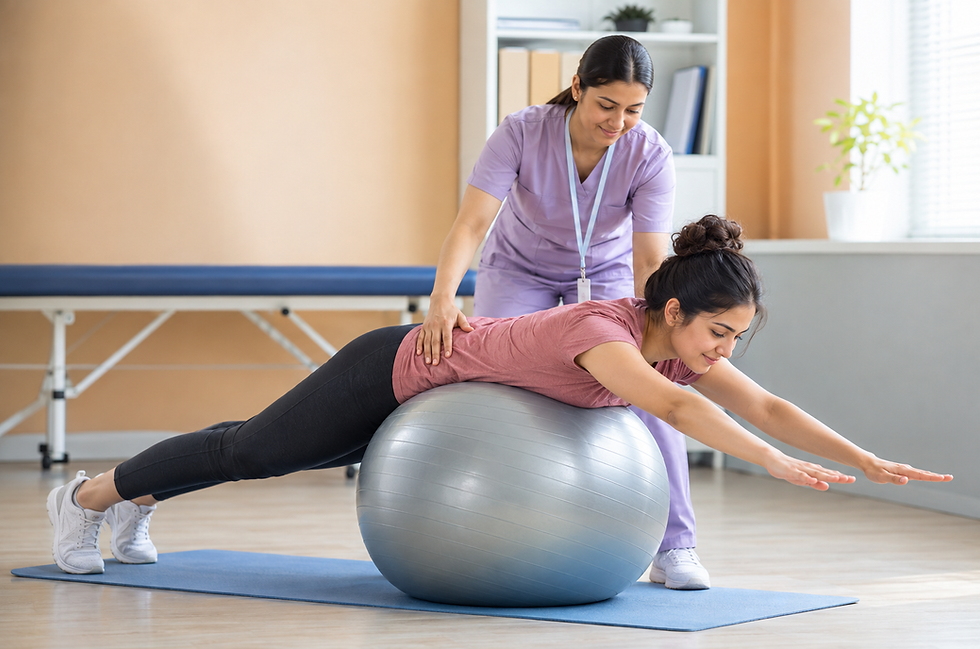
In post-injury recovery, the goal isn’t just to move again. It’s to move well again. Before adding load, the body needs to relearn how to coordinate, how to stabilize, and how to move with control. That includes rebuilding mobility where things feel restricted and restoring awareness of how different parts of the body work together.
This is exactly what we focus on through pilates for rehabilitation at Dynamic Pilates.
Without this step, strength training can reinforce compensation patterns instead of correcting them. I see this often with knee injuries, where one side takes over during squats, or with shoulder issues, where people push through movement without proper alignment and end up loading the same area again.
When we take the time to rebuild functional movement first, those patterns can be corrected early. Movement starts to feel more balanced, more supported, and much more reliable.
And from there, everything else becomes more effective.
Strength Isn’t the Same as Control
Personal training programs are often designed to increase strength through repetition and resistance. And that can be incredibly valuable at the right time.
But after an injury, I always come back to a different question with my clients:
Not just “can you do the movement?” But “how are you doing it?”
That distinction matters so much in injury recovery.
Pilates focuses on the quality of movement first. At Dynamic Pilates, I’m looking at how your body is organizing itself through each exercise. Are you moving with control? Are you compensating? Is there enough mobility where you need it, and enough support where things feel unstable?
Exercises are designed to:
Improve control
Reduce unnecessary tension
Build support through coordinated effort
Sessions are always adapted to your specific movement patterns, not just a general goal of getting stronger. That means we’re not just building muscle. We’re helping your body move in a way that actually supports long-term function.
This becomes especially important in cases like postnatal recovery, recurring back discomfort, or joint instability. In those situations, pushing for output too quickly can set people back. Focusing on control, coordination, and mobility allows the body to rebuild in a way that feels more stable and sustainable.
Why Body Awareness Changes Everything
One of the biggest shifts we see with clients isn’t strength at first. It’s awareness.
After an injury, it’s very common to feel disconnected from your body. Movements that used to feel automatic now require more effort or feel uncertain. You might hesitate before stepping, lifting, or rotating because something just doesn’t feel quite right.
This is a huge part of post-injury recovery that often gets overlooked. Pilates helps rebuild that connection.
Through slower, more intentional movement, we create space to actually feel what’s happening in your body again. At Dynamic Pilates, I guide clients to notice:
Where they’re overworking
Where support is missing
How their body responds in different positions
This is how we start restoring functional movement. Not by forcing it, but by understanding it. Over time, that awareness turns into confidence. Movements feel more predictable. Transitions feel smoother. The body starts to trust itself again. And that’s what allows you to progress safely. It’s also what makes strength training more effective later on, because you’re no longer guessing your way through movement. You’re building with clarity.
The Most Common Mistakes After Rehab
This is where things tend to go sideways, even with good intentions. We see this often at Dynamic Pilates, especially during injury recovery, when people are eager to feel “back to normal” again.
After physiotherapy, many people:
Return to full intensity too quickly
Skip foundational movement work
Focus on “feeling strong” instead of moving well
Ignore subtle discomfort because it’s not pain
On the surface, everything can look fine. But underneath, the body is still compensating.
For example, someone coming back from a back injury might jump straight into weighted workouts without restoring control or mobility, which can reintroduce strain in the same area. With shoulder injuries, I often see people training through instability without the coordination needed to support the joint, which creates longer-term limitations.
These patterns don’t mean you’re doing something wrong. They usually mean a step was skipped.
This is where pilates for rehabilitation becomes so valuable. It allows us to slow things down just enough to rebuild properly, reconnect movement patterns, and restore mobility where it’s needed, without losing momentum. Because the goal isn’t just to get back to movement, it’s to move better than you did before.
Pilates Helps You Get Back to the Gym Faster (and Better)
This is where we see the shift really happen. Starting with Pilates doesn’t slow people down. It actually helps them move forward more efficiently.
When you take the time to rebuild functional movement first:
Exercises feel more stable
The risk of re-injury decreases
I often describe this phase as a bridge. Whether someone is recovering from a knee injury, rebuilding after pregnancy, or coming back after time away due to pain, this step helps restore confidence before adding intensity. Movement starts to feel reliable again. The body feels more supported. There’s less hesitation.
And that changes everything when it comes to returning to the gym.
Instead of working around limitations, you’re moving with better coordination, better control, and a clearer understanding of how your body works. So, when you do transition into personal training or more traditional strength work, it actually feels effective. You’re not starting over. You’re starting from a much stronger foundation.
It’s Not One or the Other
I always like to remind clients that this isn’t about choosing sides. Personal training and Pilates aren’t competing approaches. They’re complementary. The difference is timing.
Pilates and functional movement help prepare the body. They rebuild coordination, restore balance, and create a foundation that feels stable and reliable. Personal training then builds on that foundation by adding load, strength, and performance.
When done in the right order, both become more effective, and more importantly, your body is actually ready for what comes next.
A Smarter Way to Rebuild
If you’ve recently finished physiotherapy or are thinking about returning to the gym, it’s worth asking a different question. Not “how quickly can I get stronger?” But “how well is my body moving right now?” In post-injury recovery, that distinction matters more than most people realize.
At Dynamic Pilates, we help clients rebuild strength and confidence through thoughtful, personalized movement. As a trusted Pilates Studio in Vancouver, we use pilates for rehabilitation to focus on rebuilding your foundation with intention. In private and semi-private sessions, I assess how your body is moving today, what it needs more of, and where we can create better support before adding intensity.
We’re not here to hold you back.
We’re here to help you move forward better, with more confidence, more clarity, and a body that actually feels ready for what’s next. If you are ready to learn more, contact us today to get started.
Sources
Byrnes K, Wu PJ, Whillier S. Is Pilates an effective rehabilitation tool? A systematic review. J Bodyw Mov Ther. 2018 Jan;22(1):192-202. doi: 10.1016/j.jbmt.2017.04.008. Epub 2017 Apr 26. PMID: 29332746.
Taberner, Matt et al. “Progressing rehabilitation after injury: consider the 'control-chaos continuum'.” British journal of sports medicine vol. 53,18 (2019): 1132-1136. doi:10.1136/bjsports-2018-100157




Comments