


Rehabilitation Pilates vs. Clinical Pilates: What's the Difference?


If you've been looking into Pilates as part of recovery, you've probably stumbled into a small
maze of terminology: clinical Pilates, rehabilitation Pilates, therapeutic Pilates. They sound different enough that you might assume you're supposed to know exactly which one you need before you walk through the door.
Thankfully, you don't.
These approaches overlap much more than their names suggest. The differences usually have more to do with where you are in your recovery, the setting you're working in, and what your body needs right now. So rather than getting tangled in terminology, let's look at what each one actually means and where they fit into the bigger picture of helping your body move well again.
Are Rehabilitation Pilates and Clinical Pilates Really Different?
A little, but probably less than you'd expect. There isn't one universally applied definition separating these terms, so clinics, studios, and healthcare professionals may use them somewhat differently. What they generally share is an individualized approach to Pilates-based movement that can support strength, mobility, function, and more comfortable movement.
It can be helpful to think of clinical, therapeutic, and rehabilitation Pilates as overlapping approaches rather than three completely separate boxes. Where you fit within that overlap depends much more on your body, your goals, and your stage of recovery than on choosing the perfect label.
What Is Clinical Pilates?
Clinical Pilates generally refers to Pilates delivered within, or closely connected to, a healthcare or physiotherapy setting. It may be introduced by a physiotherapist or another qualified healthcare professional and incorporated into a broader treatment or rehabilitation plan.
The word "clinical" is really the clue here. The environment tends to be more healthcare-focused, with an emphasis on assessment, individualized programming, and careful progression based on a person's condition, symptoms, and recovery goals.
That doesn't make it an entirely different form of Pilates. It simply means Pilates principles are being used within a more clinical framework
.
What Is Rehabilitation Pilates?
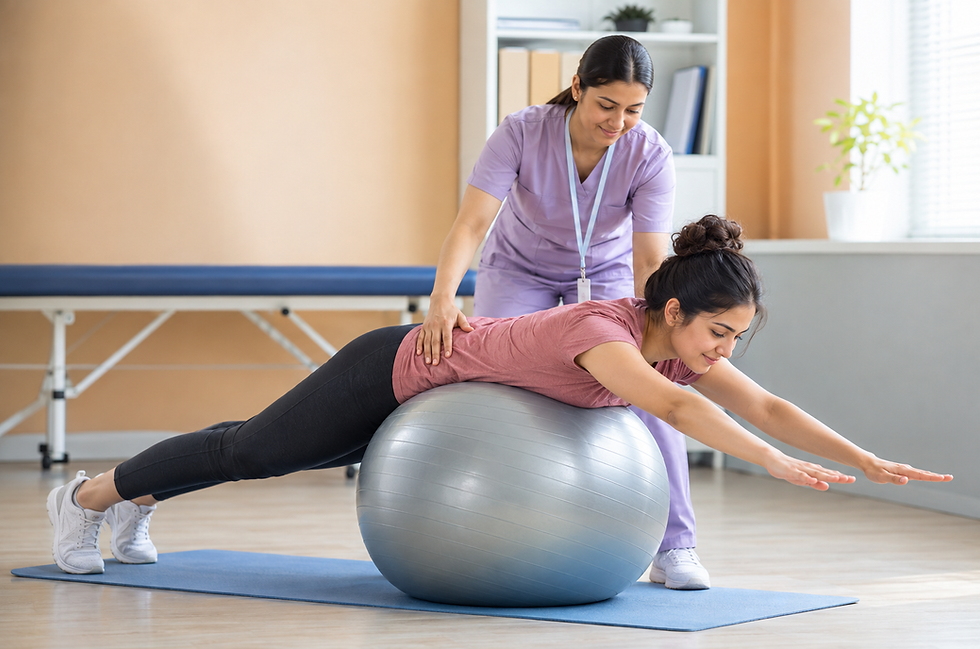
Rehabilitation Pilates focuses on rebuilding after an injury, surgery, period of inactivity, or other movement setback. It can be particularly useful once the acute stage has passed, symptoms have settled, and you've been cleared to gradually return to movement.
This is where the gap between feeling better and actually trusting your body again becomes important. Pain may have improved, but perhaps your strength hasn't completely returned. Maybe you're still moving differently to protect an old injury, or you're hesitant to return to the activities you enjoyed before.
Pilates for rehabilitation can help you gradually rebuild strength, mobility, coordination, and confidence while paying attention to how your whole body is moving. Recovery isn't simply about getting rid of pain. It's about helping your body feel capable again.
What Is Therapeutic Pilates?
Therapeutic Pilates casts an even wider net. While rehabilitation Pilates is often associated with recovering from a specific injury or setback, therapeutic Pilates can support anyone who would benefit from a more individualized and thoughtful approach to movement.
That might mean improving mobility after years at a desk, addressing movement patterns that contribute to recurring discomfort, building better balance, or simply helping your body feel stronger and more supported in everyday life.
In other words, you don't need to be injured to benefit from therapeutic movement. Sometimes the goal is recovery, and sometimes it's simply helping your body continue doing the things you love.
Clinical Pilates vs. Therapeutic Pilates vs. Rehabilitation Pilates
The easiest way to understand the difference is to put them side by side:
Clinical Pilates | Therapeutic Pilates | Rehabilitation Pilates | |
Setting | Often within physiotherapy or healthcare | Studio or clinic | Studio or clinic, often after clearance |
Timing | May happen during active treatment | Ongoing | Often after the acute stage |
Focus | Assessment and careful progression | Movement quality and long-term function | Rebuilding strength, mobility, and confidence |
Goal | Support treatment and restore function | Move better for everyday life | Return comfortably to everyday activities |
There's plenty of overlap in that table, and that's intentional. A person's needs can change throughout recovery, and the movement approach should be able to change with them.
Which Type of Pilates Is Right for You?
Instead of starting with "Do I need clinical or rehabilitation Pilates?", we prefer a much more useful question: Where is your body today, and what does it need next?
Someone who has recently had surgery will have very different needs from someone whose lower back has gradually become stiff after ten years of desk work. Both may benefit from individualized Pilates, but their starting points, exercises, and progression should look completely different.
That's one of Pilates' greatest strengths. It can be adapted across different ages, abilities, and fitness levels, allowing movement to progress alongside the person doing it (Cleveland Clinic).
If you're still dealing with an acute injury or actively receiving treatment, your healthcare provider's guidance comes first. Once you've been assessed and cleared to move, Pilates can become a supportive next step for gradually rebuilding what comes after pain relief.
How Does Dynamic Pilates Approach Rehabilitation?
At Dynamic Pilates, we don't spend much time trying to squeeze people into a particular label. Our philosophy starts with something much simpler: work with the body in front of us.
Rather than looking only at the place that hurts, we look at how the entire body is working together. How does your spine move? What are your hips doing? How are you breathing? Is one side quietly picking up extra work for the other? A sore shoulder may be influenced by limited movement through the rib cage, while persistent back discomfort can be connected to what's happening at the hips.
That whole-body perspective is central to how we approach movement. The goal isn't to chase one symptom around the body. It's to understand the movement patterns behind it and build strength, mobility, and control in a way that supports lasting change.
Many people come to us for Pilates for rehabilitation after physiotherapy, once their symptoms have settled and they've been cleared to move. From there, we can help bridge the space between completing treatment and feeling genuinely confident using your body again.
A quick note on coverage: our sessions aren't billed through extended health insurance, although many clients may be able to use a Health Savings Account (HSA). Because plans vary, it's always worth checking your individual coverage.
Ready to Find Your Starting Point?
You don't need to figure out whether your body belongs in the clinical, therapeutic, or rehabilitation category before you begin. What matters much more is understanding where your body is today and where you'd like it to go next.
Whether you're rebuilding after physiotherapy, navigating an old injury, dealing with recurring discomfort, or simply ready to feel stronger and more confident in your movement, we'll meet you there. If you're curious about Pilates for rehabilitation in Vancouver, contact the Dynamic Pilates team or book an assessment. We'd love to learn what your body has been through and help you find a comfortable, realistic way forward.
Sources
Physiopedia. "Pilates." https://www.physio-pedia.com/Pilates
Cleveland Clinic. "Pilates 101: What It Is and Its Health Benefits." https://health.clevelandclinic.org/everything-you-want-to-know-about-pilates


Comments